
Bradenton Tree Removal takes on hedge trimming, shrub work and brush removal alongside the larger tree jobs, for properties across Bradenton and the towns around it. Twenty-plus years working these species is what makes the difference on this kind of work, because the plants used for screening on this coast do not all respond the same way to a hard cut, and the ones that will not reshoot from bare wood are the ones people ruin.
The other reason we quote this work the way we do is volume. A hedge run or a cleared fence line produces far more material than its footprint suggests, and that material is a contractor load the moment we cut it. Hauling and disposal sit on their own line here as they do on every job on this site.
Hedge Trimming and Shrub Maintenance
Formal Hedges and Screening Rows
A hedge that is meant to screen has to stay dense at the bottom, and that is a function of shape and frequency rather than effort. We cut with the base slightly wider than the top so light reaches the lower growth, and we keep the interval short enough that each pass is light. A hedge cut once a year and cut hard is a hedge that thins from the ground up, whatever it looks like the week it is done.
Shrub Renovation and Hard Pruning
An overgrown shrub bed is usually recoverable, and the useful question is whether the species will break from old wood. Where it will, staged renovation over two or three seasons rebuilds a dense plant from a leggy one. Where it will not, cutting into bare wood produces a permanent hole and replanting is the cheaper answer. We identify what is in the bed before anything is cut back.
Fruiting, Flowering and Timing
Timing matters on anything that flowers or fruits, and it is the easiest thing to get wrong on a routine visit. Species that set buds on last season’s growth lose a year of flower if they are cut at the wrong point in the cycle. Where a bed mixes several habits, we note the timing per plant rather than treating the whole bed as one job with one date.
Clearing Overgrown Brush
Fence Lines, Property Edges and Easements
Linear clearing along a fence, a property boundary or a drainage easement is some of the most common brush work we do, and it is often the thing that has to happen before anything else on a property is possible. Where the growth includes stems too heavy for hand tools, mulching in place is usually the cheaper route and leaves a layer that slows the regrowth for a season.
Brush Piles, Habitat and Standing Fuel
A neglected pile of cut brush is not a neutral thing to leave on a property. It holds moisture, shelters wildlife people would rather not host close to a house, and dries into standing fuel through the drier months. Where owners want material retained, we place it deliberately and away from structures rather than leaving whatever fell where it landed.
Knowing What Not to Cut
Some of what looks like brush is regulated. Mangroves along a shoreline sit under state law entirely outside any tree or landscape ordinance, and dune plantings on coastal frontage carry their own protections. Volunteer seedlings of protected species can also grow past the local size threshold in a few seasons without anybody noticing. We check before clearing rather than after.
Commercial, Association and Managed Property
Streetscapes, Entries and Common Areas
On managed property the standard is consistency rather than a single dramatic visit. Entry features, streetscape beds, perimeter screening and retention edges each get their own interval, and each visit leaves the same conditions met: clearance around signage and lighting, sight lines open at exits and intersections, and nothing overhanging a walkway. A manager can put that in a contract and a board can see it on the ground.
Debris Volume Is the Hidden Cost
On a large hedge program the cutting is the predictable part and the material is not. Volume varies with how long it has been since the last pass, with the growing season, and with how much of the bed is being renovated rather than maintained. Quoting the disposal separately means the variation shows up where it belongs instead of being buried in a per-visit price that has to assume the worst.
Removing a Screen Instead of Maintaining It
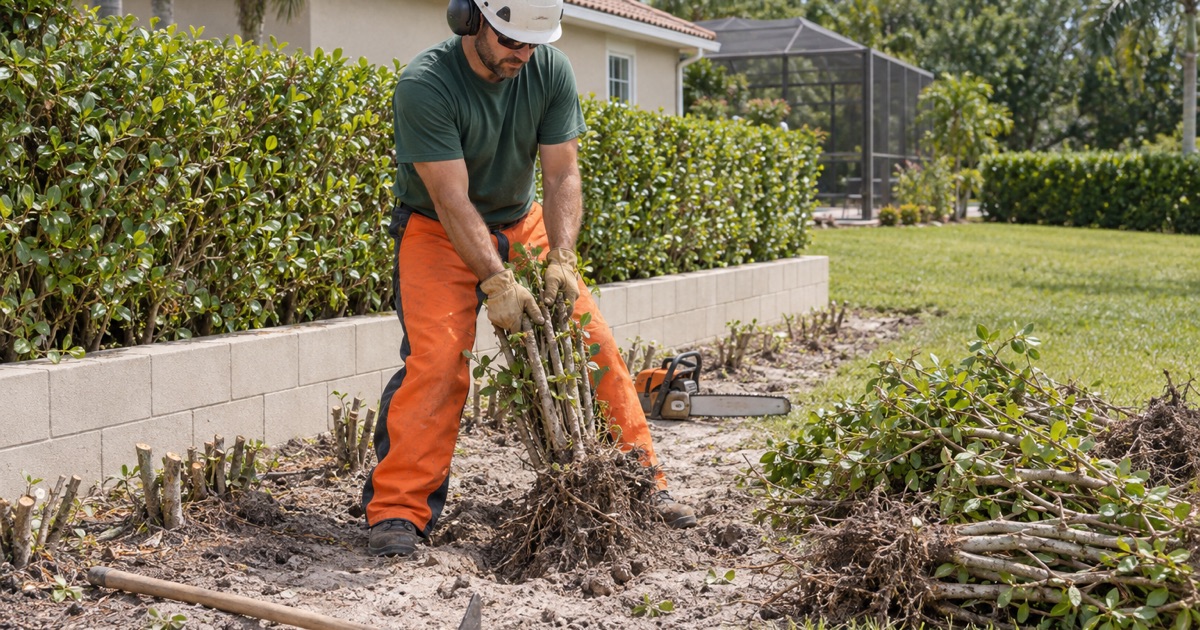
Sometimes the right answer is that the hedge should not be there. A screening row planted too close to a wall, a species that has outgrown the space it was given, or a row that has thinned past recovery all cost more to keep going than to replace. Removal on that scale is grubbing work rather than trimming work, with the root balls out and the bed left plantable, and we quote it as a separate scope so the comparison against another season of maintenance is an honest one.
- 20+ Years on This Coast
- Written Estimates
- No Topping, No Hat Racking