
Bradenton Tree Removal handles tree root removal and root pruning for properties throughout Bradenton, on jobs where the problem is below the ground rather than above it. Two decades of digging into these soils is the relevant experience here: the flatwoods profile around this city is loose sand over a cemented layer, which puts most of the root system into a shallow plate rather than sending it deep, and that shape is why roots here end up in paving, pipe and drain fields so readily.
The rule that governs all of this work is simple to state and easy to ignore: every root removed is anchorage and uptake removed. A crew that cuts whatever is in the way, backfills, and leaves has transferred the problem from your driveway to your tree, and the invoice for that arrives two or three years later.
When Roots Become the Problem
Lifted Walkways, Driveways and Paver Runs
Buttress roots lifting a slab are the most common root complaint we see, and the useful question is not how to cut the root but what that root is holding up. On a mature tree, a large buttress on the side facing the paving may be a principal anchor. Where the tree is being kept, root bridging, flexible paving or rerouting the walk is often cheaper over ten years than cutting and then dealing with a destabilized tree.
Roots in Sewer Laterals
Roots enter a lateral through a defect that already exists. Clearing them restores flow and does nothing about the crack or the failed joint that admitted them, which is why the same line blocks again on a predictable cycle. We handle the tree side — removing the offending roots where that is safe, or removing the tree where the pipe run makes coexistence impossible — and coordinate with the plumbing repair rather than replacing it.
Roots in a Septic Drain Field
A drain field spreads moisture across a wide area by design, so it draws roots into the whole footprint rather than to one point of failure. Repeat root pruning there becomes a recurring cost with no end. The lasting answers are a physical root barrier or removal of the tree responsible, and where the field itself is already failing, that assessment belongs to the septic contractor and should come first.
Pruning Roots Without Losing the Tree
How Much Can Come Out
Roots taper sharply as they leave the trunk, so distance from the flare is the single biggest factor in what a cut costs the tree. Cuts near the base take out anchorage and a large share of uptake at once; the same work at the canopy edge removes far less. We locate the cut line as far out as the problem allows, keep the cut clean rather than tearing, and stage work across seasons where the volume is significant.
Root Barriers and Redirection
Where the goal is to keep roots out of somewhere rather than to remove them, a barrier installed at the right depth redirects growth downward and outward instead of severing it. That suits new paving, a fresh drain field, a pool shell or a foundation edge, and it is far kinder to a tree than repeat pruning. It also has to be deep enough to matter, which in these shallow-plate soils is a specification worth getting right the first time.
Stability After the Work
Any significant root work changes how a tree stands, and that has to be assessed rather than assumed. A tree that has lost root support on one side and carries a heavy canopy on that same side is a different risk than it was the week before. Where we have cut, we say what that means for the tree’s stability, and where the honest answer is that it should now come down, that is in the report.
Finding Out What Is Actually Down There
Root Collar Excavation With an Air Spade
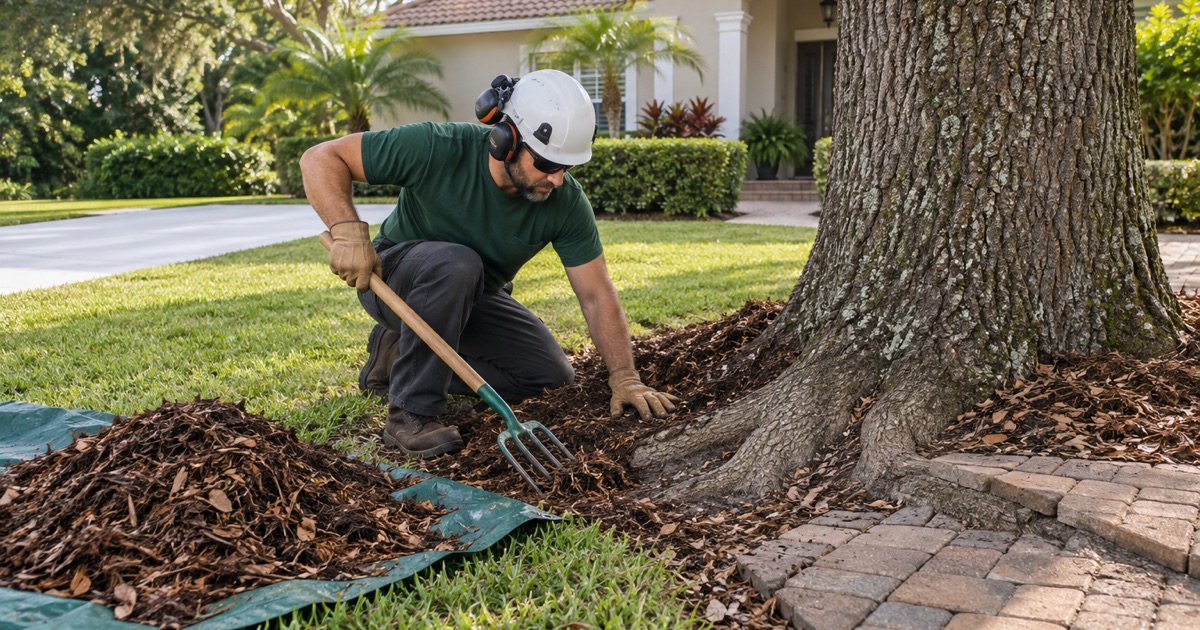
Compressed air removes soil without damaging roots, which makes it the right tool for exposing a root flare that has disappeared under years of mulch or construction fill. What it reveals is frequently the real story: decay at the stem base, a girdling root wrapped around the trunk, or a collar rotting because it has been kept wet. A trunk that enters the ground like a post rather than flaring is the sign to look.
Girdling Roots and Buried Collars
A girdling root grows around the trunk instead of away from it and slowly strangles the vascular tissue beneath, typically producing a one-sided thinning canopy years before anything obvious appears at the base. Caught early, the offending root can often be removed and the collar restored to grade. Caught late, the damage is structural and the recommendation changes.
Compaction and Decompaction
Equipment, parking, foot traffic and stockpiled material over a root plate all close the soil pore space that fine roots depend on. In poorly drained soils with a seasonal high water table, the tree has little margin to lose. Decompaction with compressed air can open the profile back up and, where organic material is worked into the fractured zone, gives the fine roots somewhere to go. It recovers condition; it does not recover severed roots.
- 20+ Years on This Coast
- Written Estimates
- No Topping, No Hat Racking